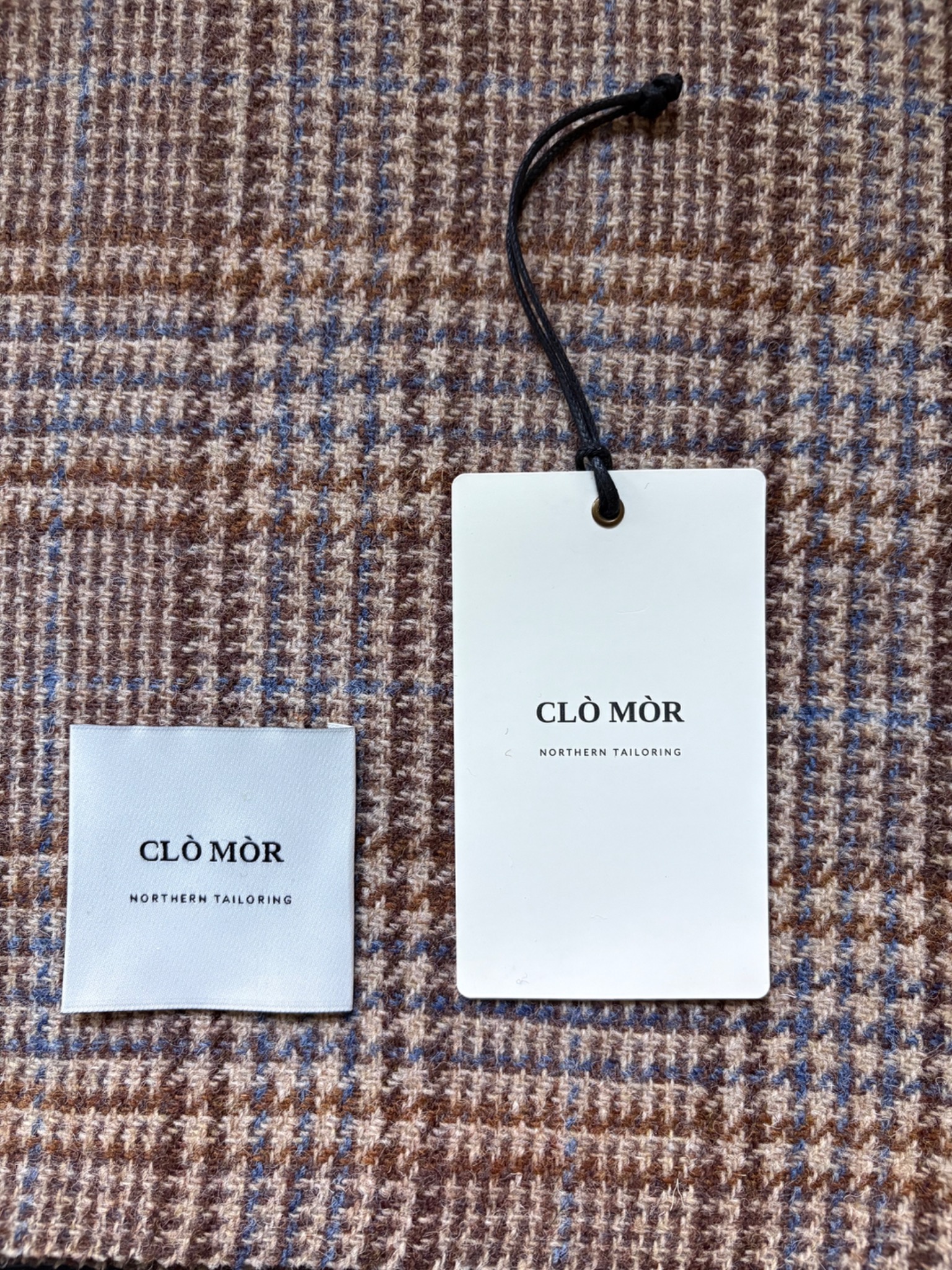
CLÒ MÒR takes its name from the Scottish Gaelic Clò Mòr — The Big Cloth — a name closely associated with Harris Tweed and the Outer Hebrides.
Some things endure because there is something right about them. A material, a construction, a way of making. They have been used, repeated, adapted and lived with. Time has tested them long before we arrive.
That is valuable knowledge.
For CLÒ MÒR, what has come before is a record of what has proved its worth. It shows what remained useful, what retained its relevance and what continued to gather character through use.
Not from the archives. From what they taught us.
An archive can show what existed. What matters is understanding why certain things remained. Why people returned to them. Why they still carry meaning after the moment in which they were made has passed.
That understanding becomes a foundation.
Respect begins with understanding. From that understanding comes the confidence to transform — carrying what has proved its worth into a new expression.
This is where CLÒ MÒR finds its own point of view.
The origin gives us a standard: substance, usefulness and the ability to remain meaningful through time. Things made to be used, lived with and kept. Things that gain something through familiarity rather than losing their relevance to it.
Harris Tweed gives that standard a physical form. Its connection to place, skill and making makes the idea tangible. It is where CLÒ MÒR begins, and the measure from which the idea can continue to grow.
The cloth gives the name its origin. The standard gives the name its future.
What has proved its worth becomes a foundation for what comes next. Knowledge is carried forward. Expression changes. The point of view becomes our own.
The origin remains. The expression moves forward.
CLÒ MÒR gives a future to what has proved its worth.